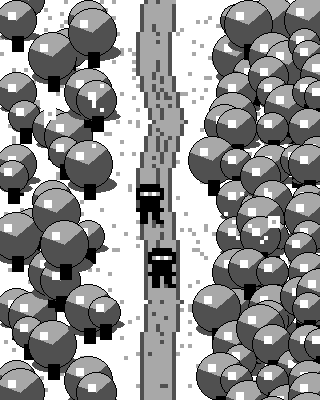
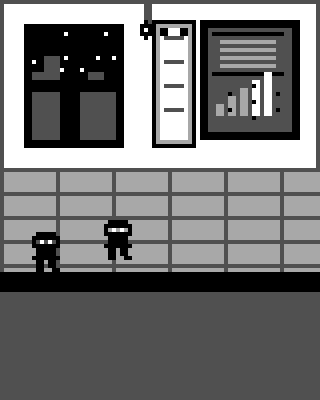
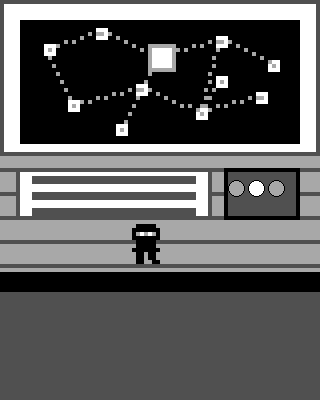
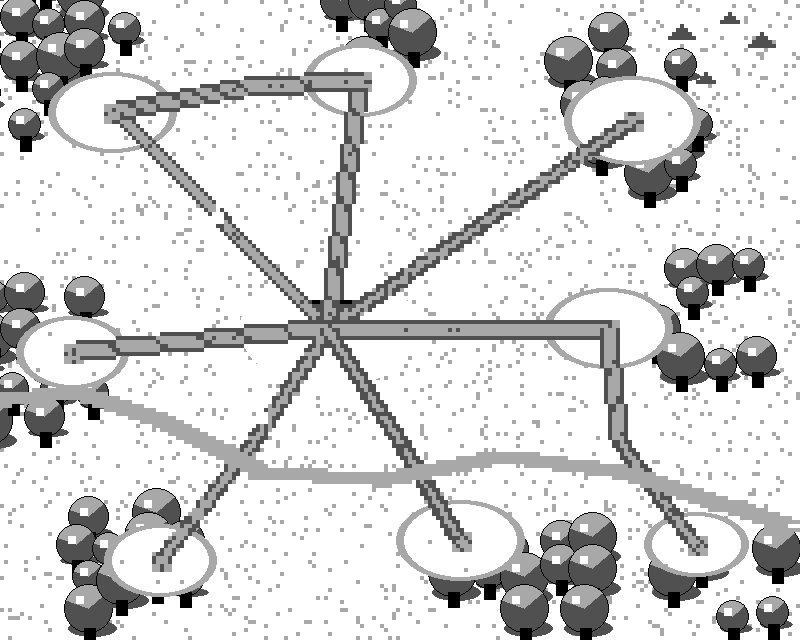
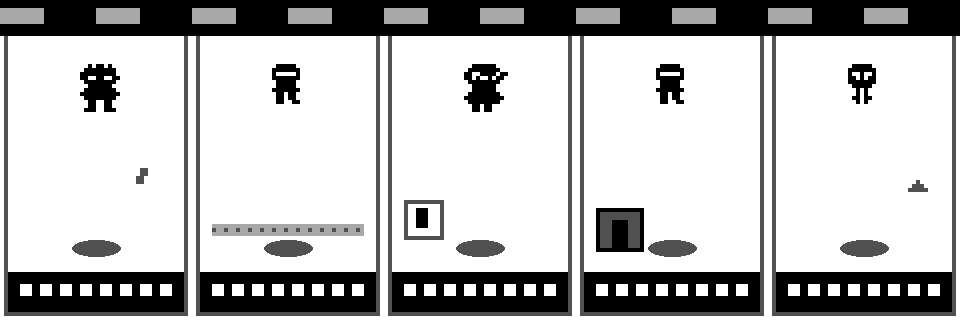
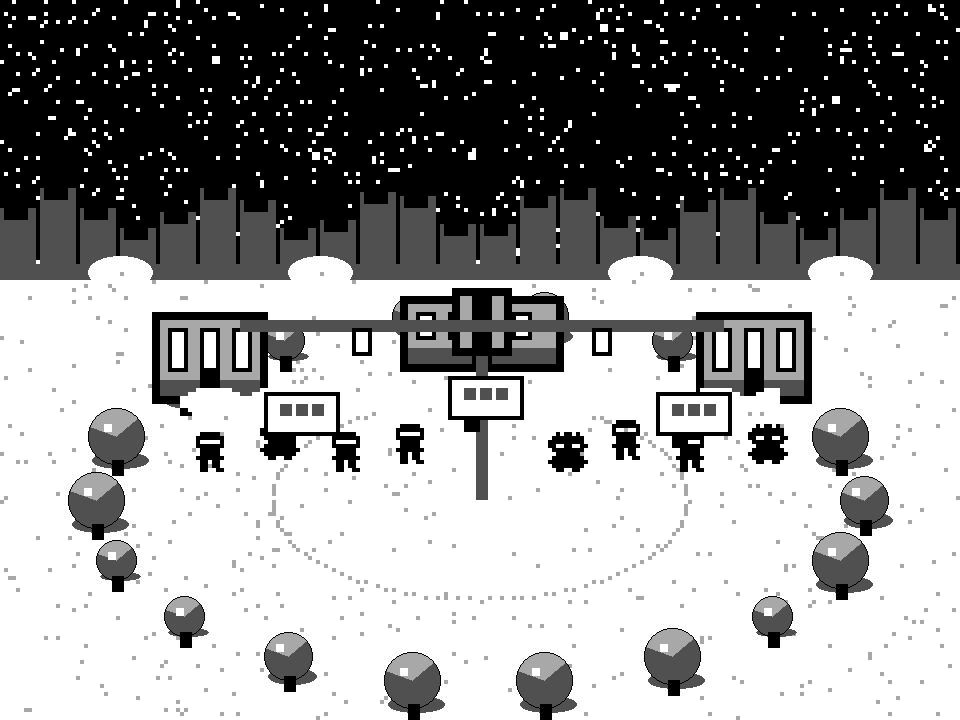
SUONA is a new way to discover music and get discovered. A streaming platform fused with a living 8-bit pixel world rendered from real listening behavior, where your audience grows through genuine resonance, not algorithms or ad budgets. Every listen shapes the map. Artists and listeners share the same world, and the world remembers every engagement and relationship made inside it.
THE LANDSCAPE: WHERE MUSIC IS NOW
Today's most famous streaming platforms built infrastructure at scale and turned the artist into a content source. Stream rates requiring millions of plays for a living wage. Discovery gated behind promotion budgets. Audiences that belong to the platform and vanish when you leave. What they built well was infrastructure. What they left open is everything else.
Platform
What they built well
What SUONA adds
Spotify
Scale, catalogue depth, mainstream reach
A discovery layer built on genuine resonance. Direct earnings at 70%, no stream-rate intermediation
Apple Music
Premium audio quality, device integration
A community layer where free listeners generate real listening income for artists
Bandcamp
Artist-direct economics, format freedom
Discovery built into the economics, a world, not a shop. Music earns through being found, not just listed
SoundCloud
Upload freedom, early community energy
Stable community-first infrastructure where artists own their attribution and data permanently
Discord
Real-time community, voice culture
Community architecture grown from music outward, chat that lives inside the sonic world
YouTube
Universal reach, visual storytelling
A platform where every listen is a genuine, meaningful listen, and commercial presence is an 8-bit character you choose to meet
The opening SUONA fills: a sonic world where discovery, community, economics, and lived experience are unified rather than distributed across separate tools.
WHAT SUONA IS
SUONA is three things simultaneously, unified by a single idea: communities form around the music that genuinely moves you.
♪
Layer 1, The Music App / Your Library, Your World
A fully equipped music companion, the streaming app you actually want. Browse by artist, album, genre, or mood. Build and organise playlists. Follow a discovery queue seeded live from your resonance history. Search the full catalogue. Queue tracks, skip freely, rate locally. Everything a great music app should do, with one addition: the music you hear here shapes a world you can walk through.
⬛
Layer 2, Sonic-Bit-Map / 8-Bit Sonic World
A navigable pixel-art world where every territory is an artist and every border is a collaboration. The map is not a visual metaphor — it is a spatially traversable space. Your avatar walks. Music from nearby territories bleeds in as you approach, volume rising as you cross each border radius. At the overlap between two territories the sounds blend. You navigate by ear, not by filter.
You leave traces where you listened deeply. You collect objects left by artists and other wanderers. You find limited releases visible only to listeners who physically arrived. The world's shape — who is near whom, which territories are expanding, where the frontier is — emerges entirely from how listeners and artists actually behave.
When a live set or DJ mix is playing from a hut, the territory pulses. Wanderers on the map hear it approaching before they arrive. The crowd clustering visibly around a glowing territory is the event. No separate events tab — it happens inside the world.
TERRAIN IS EARNED, NOT PURCHASED
Think of a Community Terrain the way you think of a Discord server , the terrain is the server, the huts are the channels , except the server exists inside a shared world that everyone inhabits together, and no one can buy their way to the centre of it.
The world map cannot be bought. Territory position is computed from the published resonance formula , ad spend, subscription tier, and follower count play no role. This is not a policy; it is an architectural property of the system. There is no database field for paid placement.
Terrain type
Who it's for
How it grows
Cost
Wanderer Patch
Every user, automatic on first login
CONVERGENCE events from genuine listeners
Free
Community Terrain
Genre scenes, collectives, local communities
Kairos visitor-events (+10 tiles per 100 events)
€1.99/month
Cultural / Indigenous
Ancestral music communities, linguistic minorities
Protected fixed radius; organic cross-cultural discovery only
Free , Concrescence Fund
Sovereign Community
Established scenes, label collectives, subcultures
Kairos events + Concrescence Fund grants
€9.99/month
Institutional
Schools, broadcasters, research labs
Defined in B2B agreement
B2B license
You can buy the aesthetic , a custom biome palette, a named NPC, a seasonal overlay. You cannot buy the land. A community that genuinely listens together, discovers together, and hosts events together will occupy more of the world than a well-funded brand that does not.
⌂
Layer 3, Host and Visit Music Huts / Community Architecture
Every artist's hut is a persistent space inside their territory that accumulates over time. Every new release adds a physical object to the room: a vinyl sleeve leans against the wall, a cassette appears on the shelf, a gig poster goes up above the door. Visitors play past releases by touching the objects. The hut is studio, gallery, and archive simultaneously. Every listener builds their own hut reflecting their sonic history — a place with visual memory, ambient audio, wanderers passing through, live events, and permanent traces.
The centrepiece of your hut is the Constellation Wall: a pixel map of every artist territory you've visited, drawn from your actual listening history. Artists you've Resonance Boosted glow brighter. Territories where you earned Scout designation have a permanent marker. Curated mixtape paths, collected items, traces left, events hosted — all of it visible.
The record that travels with your music: The Genesis Manifest is not a database entry a platform can delete. Every release, collaboration credit, stem attribution, and discovery event your music generates is written to an append-only ledger. If the platform forks, the record migrates. If the Lab dissolves, AGPLv3 guarantees any community can reconstitute the infrastructure from the public source. A field recording made in 2026 carries its full attribution chain in 2056 regardless of which platform is running.
The initial world is seeded from the Free Music Archive corpus (4,704 tracks, open licensed). Every track carries an analyzer_version field in the manifest recording which version of the audio analysis pipeline produced its organ profile. If the pipeline improves, the record of what was known and when is preserved alongside the music. The analytical history of a track is part of its archive.
A world with memory. One you return to.
The Hut Composer is a browser-based pixel tile editor built into SUONA. Every hut is a grid of tiles: floors, walls, furniture, lighting effects. A canonical 64-color SUONA Palette keeps all huts visually coherent with the world they inhabit while remaining individually distinct. Graphic artists on the platform design and sell tile packs, furniture sets, and architectural templates inside the Composer, earning 70% of every commission. Their name is written permanently into the genesis record of every hut their work appears in.
Huts cluster naturally into Districts. A genre scene, a city community, a label roster, a fan collective — when enough huts share a region of the Sonic-Bit-Map, a District coheres. Districts develop their own aesthetic identities: dominant color palettes, recurring tile styles, shared event spaces. They are not created by the platform. They emerge from behavior.
Three kinds of events live here. Live sets and DJ mixes: the artist broadcasts from their hut — proximity audio becomes the stream, listeners walk in from the map, the recording becomes a wall object when it ends. Listening parties: a release is pinned at a scheduled time; listeners who arrive early earn Scout designation, permanently retroactive. User-hosted events: any listener can host a curated session from their own hut, drawing from their Constellation Wall — the community becomes the programmer. Every event leaves a trace. Every trace is on permanent record.
Your hut is your taste made visible. It grows with every genuine discovery.
Every hut is backed by a portable manifest: a public record of its tile layout, pinned release objects, and listening history. The manifest is yours to export, self-host, or carry to any future context that reads the format. No platform lock-in. Your hut is a career asset you own outright — not a profile page that disappears when a platform pivots.
HOW IT WORKS: THE ARCHITECTURE OF TRUST
The Sonic Territory Map
The map position of every artist is computed by a published formula, open, auditable, ungameable:
Artists end up next to the artists their listeners also love. By collaboration history. By sonic proximity. Not by editorial decision or paid placement, by what the community actually does.
Every territory's visual character is generated from the artist's four resonance signals:
Depth (EO) → warm light, dense soft terrain
Range (RNX) → strange biomes, alien terrain edges
Connection (SANS) → dense lit border paths to collaborators
Community (BOND) → visible wanderer crowds, lanterns, traces
Walking the map is navigating by taste without filters or tags.
When an emerging frontier artist crosses the CONVERGENCE threshold, strangers from genuinely different sonic histories landing Kairos satisfaction within the same week, a gold pulse radiates from their territory across the map. Scouts who found them before the threshold earn a permanent "discovered them first" marker.
Proximity audio: walking toward a territory, you hear it approaching. At borders where two territories overlap, the sounds blend, sometimes harmonic, sometimes a TENSION signal the system reads privately as mismatch. The feeling of sound changing as you walk is the core navigation mechanic.
How Genuine Engagement Is Measured
SUONA reads four behaviors before anything is counted — none purchasable, none gameable by promotion spend. Return visits: the listener came back to the hut across sessions and played a release object from the wall, not just the stream. Proximity navigation: they walked in from a different territory — no search query, no recommendation engine. Constellation Wall marking: the territory is now part of their world, on permanent record. Spore path: another listener arrived via their trace or referral. A complete signal — the Kairos point — requires the first three in a single arc: hut entered, release object played, Wall marked. Four events fire at threshold: CONVERGENCE when strangers from genuinely different sonic histories land in the same hut independently; RESONANCE when a listener's Wall has this territory marked and growing; EMERGENCE when first arrivals precede any convergence threshold — Scout designation permanent and retroactive; TENSION when visits are short with no engagement — private to the artist, no public penalty.
PROMOTION CANNOT BUY THESE SIGNALS · GENUINE ENGAGEMENT EARNS REAL WEIGHT
Open source and huts aren't decorative choices — they're the growth engine.
AGPLv3 as Trust Infrastructure
The code being open isn't a concession — it's the guarantee that makes every other relationship possible. Artists, graphic designers, and listeners can verify the platform can't be quietly closed or pivoted against them. The AGPLv3 means any fork must remain open; DPLE Lab holds it in trust, not as property. That removes the single biggest fear for anyone building their livelihood on a platform: that it changes the rules after they've invested in it. Trust this deep is expensive to buy through marketing; open source gives it structurally.
WHAT OPEN SOURCE ACTUALLY MEANS HERE
AGPLv3 means anyone can read, audit, and verify every claim this platform makes. The 70% artist floor is not a promise in a terms of service , it is an arithmetic operation visible in publicly auditable code. The Kairos signal that determines whether a listening moment counts as genuine cannot be secretly tuned by a marketing team. The organ weights that generate your territory's position cannot be purchased. Every rule the platform enforces is readable by any engineer with a browser.
This has specific consequences for institutions. A university running a research project on music discovery can verify that their students' listening data is processed exactly as described. A journalism school can audit the recommendation logic before assigning SUONA as a tool. A community radio station can confirm that the Felt Hours Pool distributions are computed from the public formula, not adjusted retroactively. Open source here is not a brand position , it is the mechanism that makes every other claim in this document checkable.
server/src/index.ts , genesis_manifest table (no delete reducer)
Analytical provenance of every track
fma_tracks.analyzer_version column , version tracked per track, auditable in Genesis Manifest extended fields
All source code: github.com/daedalea , AGPLv3
Old School RuneScape requires 75% player approval to change the game. SUONA's Assembly requires a 2/3 EOT supermajority to alter any constitutional guarantee. The precedent for player-governed worlds is not theoretical , it has been running since 2013.
THIS EXTENDS TO INDIVIDUAL TRACKS
Organ scores are not set once at upload. Every RESONATE event from a genuine listener drifts a track's effective organ scores upward (effective_score = base_score + drift; drift grows by 0.05 per RESONATE, capped at 0.3). A track that accumulates genuine resonance gradually shifts toward the part of the map where that resonance is concentrated. A heavily promoted track that receives no authentic engagement stays where it started. The map's drift is the community's endorsement, written as data. Auditable: scripts/src/music/fma_analyze.ts , Hebbian drift.
COMMUNITY AS SUPERJECTION
Every listening session ends. What remains , the Kairos trace, the NIE signal, the Constellation Wall mark , is the superjection: what a felt moment leaves behind after the experience fades. A community is the accumulated superjection of many listeners over time. SUONA's world is built from these traces. The terrain is not designed; it is precipitated by collective listening.
HOW SUBCULTURES EMERGE
No one creates the Jazz Quarter. It emerges when enough communities sit close enough with similar sonic character (more than 60% organ similarity within 200 tiles). The system names it automatically from the dominant organ pair , "The RNX Corridor", "The Deep EO Quarter" , and it becomes visible on the world map. No editorial decision. No committee. The map is the community's actual behaviour made visible.
Huts as the Onboarding Surface
Every new artist gets a free auto-generated hut on first release. It's not just a profile — it's a physical territory in the map that reflects real listening behavior. A new artist doesn't arrive to an empty page; they arrive to a place that already exists in the world and can be customized. The Sonic-Bit-Map becomes something worth exploring precisely because huts vary — graphic artists earn 70% from commissions, template packs, and hut element sales, with permanent attribution in genesis manifests. The visual diversity of the world is crowd-built, not platform-built.
The Spore Network: Word-of-Mouth Made Structural
Referrals earn Resonance Credits (€5 platform credit per paid conversion) — cheaper than the €8–15 industry average CAC. More importantly, the network rewards quality over quantity: it's attribution-based, not pyramid-based. Early users who bring in artists or listeners leave a traceable mark in the world's genesis record. Onboarding isn't a funnel; it's an act that persists in the map.
Free Listeners Fund Artist Income Without Extracting from Either
The Maxima — "no entity earns by extracting from another" — is operationalized through the F2P architecture: free listeners generate listening events that feed the NIE signal layer, improving map quality, which drives Discovery Mode engagement, which drives advertising revenue, which feeds the Resonance Dividend Pool, which pays artists. The open-source kernel makes this chain auditable. Anyone can verify the math isn't rigged. That auditability is what makes the model believable to artists who've been burned before.
The Ensemble
DPLE Lab is the concert hall — it doesn't own the music. Artists are musicians. Graphic artists are stage designers. The Spore Network are scouts. Daedalea builds the instrument. The hall runs on an endowment (Concrescence Fund), not ticket extraction. Open source is what keeps the hall from becoming a landlord. Huts are what make the hall worth entering.
SUONA's 70% artist floor is written into the founding charter, permanent by design. It requires a two-thirds community vote to alter, enforced through the non-profit entity structure, the open-source codebase, and the fork-protection reserve in the Concrescence Fund. The community retains fork rights at all times, if governance ever fails, the reserve funds a community rebuild.
From Listening to Governance
♪Daily listening + genuine resonance
↓Discovery Points (HP) accumulateacross all DPLE products
↓10,000 HP + community validation
↓Eternal Object Token (EOT), governance token
THE ASSEMBLY
EOT holders vote on platform direction and charter changes
2/3 supermajority required to alter founding charter
Fork-protection reserve always funded, community can always rebuild
Eternal Object Tokens (EOTs), governance tokens earned after sustained genuine contribution. Soulbound: non-transferable, non-purchasable. Named for Whitehead's concept of patterns that persist across occasions of experience, earned by being present and real in the world, not by purchase.
The Artist Flywheel
→Artist releases music, a physical object appears on the hut wall, territory takes shape on the map
→Proximity audio draws wanderers in, listeners walk into the hut from the map, not from a search bar
→Listener plays wall object, marks Constellation Wall, Kairos point fires, genuine signal logged
→CONVERGENCE threshold crossed, territory pulses across map, Scout designations earned, spore paths form
→New artists placed nearby by resonance proximity, Artist A discovers Artist B in the map
→Collaboration forms, credit trail written permanently into the music record
→Events accelerate it, live sets, listening parties, user-hosted sessions, recordings become new wall objects
→Active hut clusters cohere into Districts, shared aesthetic, shared event spaces, collective identity
→Sustained presence accumulates EOTs for artists and listeners alike, governance voice grows with contribution
↺Each revolution: permanent, auditable value in the music record. The world remembers.
(Phase 3–4) Owns the fully open-source discovery engine (AGPLv3)
(Phase 3–4) Governs the music record ledger
(Phase 3–4) Distributes Felt Hours Pool and Concrescence Fund
(Phase 3–4) Holds the commons in perpetuity
(Phase 3–4) Cannot distribute profits
Pre-incorporation (Phase 0–2): Lab% and Fund% accumulate in Daedalea SAPI ring-fenced reserve. Transfer to DPLE Lab A.C. at Incorporation Kairos (Phase 3–4).
↕ cross-license agreement
Daedalea Studio SAPI de C.V., Commercial · Mexico · Channel 2
Operates memberships, item economy, advertising
Enforces 70/10/20 via direct artist payouts
Funds Channel 1 Lab
Can pursue commercial partnerships
COMMUNITY , THE LOAD-BEARING STRUCTURE
SUONA is an MMO. That carries consequences no music platform has named. Every persistent online world that has lasted , OSRS, Minecraft servers, Discord communities , solved the same underlying problem: the community that makes the world valuable is the same community that can break it. Governance doesn't prevent conflict. It determines how fast conflict resolves and whether it leaves the world intact or hollow.
SUONA's governance operates in three layers. The first cannot be gamed. The second is community-administered. The third cannot be touched without a supermajority.
LAYER 1 , ARCHITECTURE IS THE FIRST GOVERNANCE
The rules that don't need enforcing because they're written into the engine.
Most platforms write policy against fake engagement and try to detect and ban it after the fact. SUONA's approach is different: the primary income and influence signals are architecturally hard to manufacture , not just against the terms of service, but structurally outside the signal path.
THE KAIROS GATE
A listening session generates NIE events only if it passes the T7 Satisfaction gate: a satisfaction metric in the window [0.45, 0.70]. This window is calibrated to the temporal dynamics of genuine engagement , the signal signature of a person actually listening. Sessions outside the window are invisible to the NIE pipeline. They happen. They don't count.
Passive background play , satisfaction drops below 0.45; not enough active signal present
Repeated loop plays , satisfaction ceiling exceeded at 0.70; diminishing returns enforced architecturally, not by policy
Bot-generated playback , without genuine interaction at T0, the T1 vector state never rises into range
Purchased stream counts , external metrics have no pathway into the TSK pipeline; NIE events only fire from internal Kairos-validated sessions
The Kairos gate is a calculation, not a moderation decision. No admin can override it. No artist can purchase past it. Auditable: scripts/src/tsk/tier7_satisfaction.ts.
HEBBIAN DRIFT , ORGANIC SCORES, NOT BOUGHT SCORES
An artist's territory position derives from organ scores. Organ scores are not fixed at upload , they drift. The rule: effective_score = base_score + drift, where drift increases by 0.05 per genuine RESONATE event, capped at 0.3. A RESONATE event requires a Kairos-validated session that also passes the T6 NIE detection gate. Scores cannot be bulk-purchased , each increment requires a separate genuine session. A track flooded with fake plays stays at base_score because fake sessions never trigger RESONATE. The 0.3 cap means no single track can dominate a territory through volume alone , breadth of genuine resonance determines position, not intensity of promotion.
Governance tokens (EOTs) are earned through accumulated HP (10,000 HP + community validation). Vote weight = 1 + √(EOT count) / 100. The square root is the anti-gaming mechanism: 100 EOTs = 1.1 weight. 10,000 EOTs = 2.0 weight. 1,000,000 EOTs = 11.0 weight. Marginal return on additional EOTs approaches zero. Community breadth , many moderate-EOT holders , outweighs individual depth at every scale. The formula itself is a constitutional constant, alterable only by the 2/3 supermajority it governs.
NIE 4-GATE FILTERING , EMERGENCE CAN'T BE MANUFACTURED
The highest-value NIE events (EMERGENCE carries ×2.0 Resonance Dividend weight) require simultaneous conditions across multiple organ scores at T6 , new energy above threshold, existing community coherence above threshold, and the same event type hasn't fired recently from that listener-territory pair. You cannot manufacture EMERGENCE by streaming one track repeatedly. The multi-organ, multi-session, temporally spread requirement means genuine discovery is structurally the most efficient path to the highest-value signals. Gaming the NIE pipeline is harder than discovering music authentically.
LAYER 2 , COMMUNITY RULES
What each terrain zone governs for itself.
Think of each terrain zone as a server: it has a culture, a steward, explicit norms, and a community that self-selects around a sonic identity. The world map is the federation of those servers. The platform provides the architecture. Each community decides how to use it , setting visible guidelines, delegating moderation roles to trusted members, configuring hut admission standards (open or invite-only), hosting events with zone-specific rules, and petitioning for Ethics Committee review when disputes can't resolve internally.
What this layer adds that no other platform has: terrain size is earned by genuine engagement, not purchased. A moderation decision that drives listeners away is visible directly as territory shrinkage on the world map. A steward who governs well earns tiles. A steward who governs badly loses them. The map is a real-time public signal of each community's health , the community's reputation is literally its geography.
Zone boundaries and District designations are algorithmic, not editorial. No one commissions the Jazz Quarter , it emerges when communities with >60% organ similarity cluster within 200 tiles. The communities that earn proximity through genuine sonic resonance become neighbours on the map. Terrain conflict between adjacent zones resolves through the same engine: Kairos-validated engagement shifts the boundary over time. The terrain mediates disputes that no moderator could arbitrate fairly.
LAYER 3 , CONSTITUTIONAL GUARANTEES
What no steward and no Assembly majority can touch.
Some rules are structural constants , not policies that can be voted away, but architectural commitments requiring a 2/3 EOT supermajority to alter:
70% artist floor , on all direct transactions, always
Indigenous Terrain commercial exclusion , no commercial content within designated Cultural Terrain regardless of steward preference
Fork-protection reserve , permanently funded; the community can always rebuild
Free Wanderer access , LISTENING and SCOUTING always free; no vote can gate these behind a paywall
Vote weight formula , the √ root structure cannot be changed without the 2/3 vote it governs (the anti-plutocracy mechanism protects itself)
The 2/3 threshold is calibrated deliberately: high enough to require genuine supermajority consensus, low enough that a determined community can still reach it. These rules feel permanent because changing them genuinely requires community consent , not a board decision.
THE HUMAN AGENCY PROBLEM
OSRS's most persistent governance challenge was botting , automated accounts farming resources, skewing economies, devaluing thousands of hours of genuine player effort. Minecraft faction servers collapsed when enforcement depended on admin discretion rather than system design: administrators burned out, exploiters adapted faster, and communities that couldn't govern themselves didn't survive. The lesson from both: rules written in policy are slower than humans finding the edges of them. Rules written in the engine aren't.
SUONA designs for this explicitly. The question is not "how do we prevent abuse" but "which layer catches each risk, how fast, and what does recovery look like."
Risk
Mechanism
Layer
Fake listening / resonance farming
Bot loops, passive play, purchased stream counts
1 , T7 gate; outside [0.45, 0.70] is architecturally invisible
Organ score manipulation
Repeated plays to drift territory position artificially
1 , each drift requires Kairos-validated RESONATE; cap at 0.3
Discovery event farming
Manufacturing EMERGENCE for ×2.0 Dividend weight
1 , NIE 4-gate; multi-organ, multi-session, temporally spread
Governance capture
Accumulating EOTs for disproportionate vote weight
1 , √ root formula; marginal EOT return approaches zero
Cultural appropriation
Sacred music sampled; territory clusters near Indigenous zone
2 + 3 , Ethics Committee review; Cultural Terrain exclusion
Faction conflict
Communities dispute District boundary or zone identity
Disputes that don't resolve at the terrain level escalate to the Ethics Committee , a small standing body of elected Assembly members with a deliberately narrow mandate: cultural harm, systematic abuse, and constitutional compliance. It cannot override Assembly votes. It issues public findings, recommends remediation timelines, and in cases of constitutional violation, triggers a mandatory Assembly review.
At Phase 1 scale the Committee operates like a senior moderation team , responsive, case-by-case, relationship-based. At Phase 3 scale (100K+ users, 1,000+ terrain zones) it operates as a court: standardised procedures, public precedent records, automated pre-screening before human review. The constitutional basis doesn't change. What scales is the procedure.
THE FORK AS SAFETY VALVE
OSRS exists because a community forced a fork from RuneScape 3 , adversarial, two years of pressure, against the platform's initial intent. SUONA's fork mechanism is constitutional: the fork-protection reserve is permanently funded, the Genesis Manifest migrates with the community, and the AGPLv3 engine belongs to no single entity.
The threshold is deliberately high: a 2/3 Assembly vote, a funded reserve, a full Genesis Manifest migration. A community that reaches this threshold has exhausted every layer above it. The fork is not the first tool. It is what makes every other tool credible. An Assembly that knows the community has a real exit route makes better governance decisions than one that knows the community is trapped.
The community is not a feature. It is the terrain, the income engine, the governance substrate, and the primary failure mode. SUONA is designed around all four simultaneously.
PHASE ROADMAP
PHASE 0
The Commons
Now → Summer 2026
Music record live
Discovery Mode (basic)
Vibing Mode
Free tier + Explorer soft launch
Rights registration (MX + US)
100 artists / 1K listeners
8/10 beta artists: "I found listeners who genuinely care"
PHASE 1
The Frontier
2026 Q4 – 2027
Bazaar live
All tiers live
NPC advertising pilot
Seasonal Events Q1–Q2
Scout system live
Portal Device (500 units)
3 artists earning >€500/month from SUONA
PHASE 2
The Biomes
2027 – 2028
Mobile app full release
EOT governance live
Community-named biomes
100 brands in rotation
Resonance Pool: €100K/mo
International rights (CA/UK/ES)
Top 10%: €150–500/month; Scout-driven career events
PHASE 3
The World
2028 H1+
Assembly fully operational
Concrescence Fund: €400K+/mo
Fork reserve funded
Independent commons
50K+ artists
500K+ listeners
The map is more culturally accurate than any algorithm's taste graph
THE ACTIVATION STEP
Archive.org is a seed. Artist uploads are the engine.
Every income mechanism SUONA describes was designed for a world where an artist uploads their music and real listeners discover it. The Kairos signal validates genuine listening. The NIE events attribute discovery back to the artist. The Genesis Manifest records the upload as an immutable contribution. The 70% direct transaction fires. The Resonance Dividend flows to the right person. None of that chain is fully active while audio lives on someone else's server.
The reason SUONA has not opened uploads yet is a cost constraint that no longer exists. The canonical advice for audio hosting has always been: never stream files you host yourself, CDN egress will bankrupt you. That advice was written for AWS S3 pricing. Cloudflare R2 has zero egress fees. Files stored in R2 and served through Cloudflare's CDN cost nothing to stream, regardless of listener count. The economic objection to hosting is resolved.
Catalog size
Storage
Monthly cost
10,000 tracks (Phase 1)
~80 GB
~$1.20
100,000 tracks (Phase 2)
~800 GB
~$12
1,000,000 tracks (Phase 3)
~8 TB
~$120
Streaming egress (all phases)
Cloudflare CDN
$0
The fingerprinting pipeline, Genesis Manifest schema, territory placement logic, and Kairos/NIE event system are all in production. Upload hosting plugs a real fuel source into a working engine. Steps 1 to 4 are plumbing: upload endpoint (Artist Pro tier), R2 bucket, analyzer queue (synthesizeVectorV2 already running), Genesis Manifest upload record (immutable from first write).
SCALE , FROM ONE USER TO ONE WORLD
Every part of SUONA is an instance of the same pattern at a different scale. A single user's listening session generates a Kairos moment (T7 Satisfaction). That moment writes to a community's Territory epoch (T8 Epoch Layer). That epoch shapes a terrain zone's organ profile. That organ profile contributes to a District's emergent identity. That District becomes legible as a cultural region on the world map. The same transductive process , prehension, resonance, emission, satisfaction , runs at every level.
ENTITY (single user)
  ↓  listening generates Kairos moments
  ↓  Kairos moments generate NIE signals
COMMUNITY (terrain zone)
  ↓  NIE signals shape territory organ profile
  ↓  organ profiles determine terrain aesthetics and map position
DISTRICT (emergent region)
  ↓  3+ terrain zones with >60% organ similarity → automatic District designation
  ↓  Districts host Assembly-registered events, Season Events
WORLD INSTANCE
  ↓  single infinite plane, one world, one community
  ↓  regional SpacetimeDB nodes share the same PostgreSQL control plane
EPOCH
  ↓  every 60 seconds: T0 to T8 pipeline processes all active territories
  ↓  world state updates, Genesis Manifest records the moment permanently
Infrastructure phases and concurrent user capacity
Infrastructure cost as a fraction of revenue shrinks at every order of magnitude. At Phase 3 with 2% paid conversion at €5/month, revenue is 2 to 9 times infrastructure cost before B2B, grants, or Studio tithe income is counted.
World instances: last resort, not default
SUONA's thesis is one world , the map is only meaningful because everyone shares it. A genre scene in Oaxaca and a techno collective in Berlin occupy the same infinite plane, and their proximity or distance on that plane is determined by their actual sonic relationship. Splitting into separate world instances would destroy this.
World instances are available as a last resort when a subculture grows large enough that it genuinely requires its own governance. The threshold is not a user count , it is a constitutional act: a 2/3 Assembly supermajority vote, a funded fork-protection reserve, and a full Genesis Manifest migration. The forked world inherits the full open-source engine (AGPLv3) and its own copy of the record. The original world continues unchanged.
The map is only valuable because it is shared. We protect the single world as long as it can hold the community. When a community becomes a world unto itself, the infrastructure is ready.
World types , the same engine at every depth
The current SUONA engine is not a single game , it is a world engine. The TSK Runtime (T0 to T8), the NIE pipeline, the terrain architecture, and the Kairos gating work at any depth of engagement. Every mode runs on the same map. Every mode generates the same signals. What changes is what the player can do.
Curating tournaments, sampling battles, mix contests with community judging.
OSRS Tournaments / PvP worlds
Narrative / Quest
Story-driven zones, NPC dialogue chains, linear quest arcs. Same terrain, different active layer.
Adventure-mode worlds
Education Worlds
Restricted commercial layer, student listening does not feed commercial recommendation, IRB-compatible session logging.
Institutional terrain, already designed
OSRS proved that one world with multiple engagement depths outlasts platforms that try to be everything at once. Minecraft proved that giving players authorship of the world creates endurance no designed content can match. SUONA inherits both: one shared map (OSRS) + player-authored terrain (Minecraft) + music as the physics of the world (neither). The world types are the different depths at which you can participate in making it.
SUONA IS FOR
🎸
The Artist Ready to Be Found
Upload. Territory appears in the frontier. Your 70% is constitutional law. Your music record travels with you wherever you go.
🎧
The Listener Who Wants to Be Satisfied
One great discovery. A complete session. The feeling of having actually heard something. That is the platform's definition of success.
🧭
The Scout Who Builds Cultural Memory
You found them first. SUONA records it permanently, retroactively. When they reach CONVERGENCE, your discovery points are already waiting.
🏡
The Community Builder Who Wants One World
Your listeners, collaborators, wanderers, in a world together. Hut. Territory. Traces. Chat that exists inside the music.
🤖
The Brand That Wants Genuine Presence
One 8-bit NPC encounter, the whole world, opt-in. 50% of your placement fee flows directly to artists whose territories you were near.
⬛
SUONA is a sonic world where discovery is a real event you can walk through, artists earn 70% of everything by constitutional law, and the map is the community's actual listening behaviour made visible.
The platform's own success metric rewards depth over duration.
The commons it builds compounds with every genuine connection made inside it.
REVENUE & GOVERNANCE ARCHITECTURE
Daedalea operates the platform commercially as a mission-locked Mexican SAPI from day one — this is the right structure, not a compromise. DPLE Lab A.C. incorporates at Incorporation Kairos: triggered by a tangible community project that genuinely requires a non-profit legal vehicle (e.g. Xochi — Xochimilco regeneration through gaming and territorial listening), or by an Assembly petition with ≥ 500 EOT holders voting 2/3 in favour. Not by a MRR threshold. Not by a board meeting. By a real community need. Constitutional protections are architecturally enforced from Day 1 (AGPLv3 + Stripe Connect + articles of incorporation + Community Charter) — the Foundation adds governance infrastructure, not trust.
DAEDALEA STUDIO SAPI de C.V.
Mission-locked commercial · Mexico · Active Day 1
● ACTIVE
OPERATES NOW
Memberships — Wanderer (free, always) / Member (€4.99/month or Harmony Bond) / Explorer Pass (€7.99) / Artist Pro (€9.99) / Community Pass (€12.99). LISTENING and SCOUTING are constitutionally free.
Item economy — Bazaar, Season Skins, Stem Shards, collectibles
Advertising layer — 8-bit NPC encounters in The Between (Layer 2); artist hub sponsorships, branded item displays, creator-negotiated brand deals (artist opt-in). Vibing Mode and User Hubs constitutionally ad-free.
Frontier Zone Sponsorships — brand-named map expansions; community owns them permanently after sponsorship ends
TSK Runtime (AGPLv3) — transferred from Daedalea at incorporation. Open-source resonance engine. Any fork must stay open.
Genesis Manifest schema authority — append-only record of every release, credit, collaboration, contribution.
Brand & marks (SUONA, DPLE, Daedalea) — transferred from Daedalea at incorporation.
Concrescence Fund — accumulated in Daedalea-held escrow during Phase 0–2 as Foundation launch capital, transferred at Incorporation Kairos. Phase 0–2: 10% of direct transactions; Phase 2+: 20% (architectural transition). At Phase 4 volumes (~€2–6M/month routed-through), this is €400K–1.2M/month in community grant capacity. Governed by the Assembly.
The Assembly + Ethics Committee — EOT holders vote on constitutional changes. 2/3 supermajority required to alter the founding charter.
FOUNDATION PREPARATION (readiness: Phase 1–2; kairos trigger: Phase 3–4)
Concrescence escrow ≥ €50K accumulated as Foundation launch capital
Foundation lawyer retained · board candidates identified (no Daedalea equity, no operational role)
Second deployment (VEGAFY or Xochi) in active development
INCORPORATION KAIROS (not a metric — triggered by)
Option A: Tangible community project that requires A.C. as legal vehicle — e.g. Xochi (Xochimilco regeneration through gaming and territorial listening: CONACYT/FONCA grants, UNAM partnership, Cultural Terrain stewardship, UNESCO recognition — none achievable as for-profit)
Option B: Assembly petition — ≥ 500 EOT holders vote 2/3 majority to incorporate + ≥ 3 board members with genuine community standing + Concrescence Fund ≥ €100K + legal paperwork executed
Constitutional promises enforced architecturally from Day 1 — AGPLv3 + Stripe Connect + articles of incorporation
30% of every artist direct transaction accumulates in Daedalea-held escrow with public quarterly transparency reports (Phase 0–2: 20% Lab ops + 10% Concrescence; Phase 2+: 10% Lab ops + 20% Concrescence)
WHO THIS INFRASTRUCTURE IS FREE FOR
The Linking Exception (§7) and the Concrescence Fund together create a structural commitment to access that is not at the discretion of any board:
Entity type
What they get
Cost
Schools & universities
Full Institutional Terrain (up to 200 tiles, 20 huts, private or public), research data access via IRB agreement, custom NPC, student listening does not feed commercial recommendation
Concrescence Fund subsidy , €0
Indigenous & oral tradition communities
Cultural Terrain (50 tiles, fixed, commercial exclusion zone), Lab-assisted organ profiling of music corpus, full UTF-8 terrain name, 2 cultural NPCs, collective authorship manifest
Concrescence Fund subsidy , €0
Community radio stations
Community Terrain (30 to 60 tiles, public map listing, 1 mascot NPC, 3 to 8 huts)
€1.99/month , or Concrescence Fund grant for qualifying non-profits
Independent researchers
Read access to anonymised NIE aggregate data, Genesis Manifest export API, TSK Runtime source code
Free , AGPLv3
Developers building on the engine
Full TSK Runtime (T0 to T8), organ pipeline, FFITTSSV0 protocol
Free , AGPLv3
The constitutional basis: DPLE Estatutos Art. 5f (linguistic minorities), 5g (community nodes), 5h (digital equity), 5j (Concrescence Fund mandate). These are not discretionary grants , they are obligations the Assembly cannot vote away.
Daedalea is SpacetimeDB, not Mozilla. The Foundation is not a milestone. It is a consequence. DPLE Lab A.C. incorporates when a real community project needs it — when Xochi needs a CONACYT grant, when a chinamperos community needs an institutional partner, when 500 EOT holders say it is time. Not before. For-profit excellence first. Constitutional promises architecturally enforced. Capital accumulating for when it matters.
HOW REVENUE FLOWS
Every revenue event in SUONA has a defined split. The 70% artist floor is enforced architecturally through Stripe Connect direct payouts — not routed through the platform. No entity earns by extracting from another.
The 70% artist floor is constitutional — written into the founding charter, enforced via direct Stripe Connect payouts, unalterable without a two-thirds Assembly vote. Phase 0–2 split: 70% artist / 20% Lab / 10% Fund. From Phase 2+ (architectural transition, Stripe Connect): 70% artist / 10% Lab / 20% Fund. The Lab % is a ceiling: any operations surplus goes to the Felt Hours Pool.
⬛BRAND NPC ENCOUNTER FEEThe Between (Layer 2) only · opt-in · 8-bit · 3 screens max
Every commercial encounter directly funds artist income (50% to Resonance Dividend Pool, weighted by discovery signal quality: CONVERGENCE events earn ×1.5, EMERGENCE events earn ×2.0). The 25% Daedalea operational margin compensates the team that runs brand sales, creative review, deployment, and account management — labour-intensive work that artists and the community both benefit from. The 15% Lab + 10% Concrescence funds infrastructure and community programmes.
Direct collabs are where Daedalea earns from operating the venue. Seasonal events and branded activations bring multiple artists into curated experiences (Daedalea provides creative direction and production); B2B partnerships are pure ecosystem-reach contracts (no individual artists involved). In both cases, ≥25% still routes to Lab infrastructure + Concrescence Fund — the brand layer continues to fund the commons even where Daedalea retains the larger operational share. The constitutional prohibitions (no Vibing Mode ads, no User Hubs ads, no paid territory placement, no unsolicited NPC contact, Hebbian-drift Regenerative Brand Score gates visibility) apply identically to direct collabs.
◆FELT HOURS POOLpays artists when free listeners genuinely connect · no payment required from listener
Source:        DPLE Lab operating surplus above infrastructure costs
Trigger:       Kairos-confirmed listening only (passive background play = €0)
Distribution:  Monthly, proportional to genuine engagement depth
Integrity:     4-gate NIE cascade (71.5% accuracy) — promotion cannot buy this signal
A listener who finds one perfect track and closes the app in genuine completion generates a stronger signal than three hours of distracted scrolling. Depth over duration, always. Free listeners fund artist income without either paying or being extracted from.
Artist releases a stem (loop, sample, layer)
  └→  Another artist builds a track with it: 5–20% of that track's earnings → stem creator
        └→  That track gets remixed: credit trail continues downstream, forever
              └→  Attribution recorded in Genesis Manifest — permanent, portable, automatic
Stem credit trails are enforced architecturally, not through manual claims. No action required from the original creator. The trail is part of the Genesis Manifest and travels with the creator on exit from any platform.
An artist on SUONA is not a content supplier to be managed , they are the reason the world exists. The 70% floor is not a competitive feature; it is a statement about whose labour the platform depends on and who should own the value it creates.
Work type
Split
Mechanism
Hut Composer template (listed in Bazaar)
70% designer / 10% Lab / 20% Fund
Direct sale via Stripe Connect , same split as music
Paid from Concrescence Fund 30% Community Programs
Open call, voted by Assembly
An artist releases a track , commissions a pixel hut skin from a designer (designer earns) , another artist builds a remix from the stem (stem creator earns perpetual trail) , a brand sponsors the artist's hub (artist earns 70% of hub transactions) , the remix reaches CONVERGENCE and both the original artist and the remixer earn Resonance Dividend Pool weight. Four people earning from one creative act. None of them paid a platform fee to participate.
⚔DISCOVERY QUESTS & THE TWO-CLASS ITEM ECONOMYearned items vs. bought skins · no pay-to-signal in the public world · Discovery Quests as a music-commerce event
SUONA borrows OSRS's untradeable earned-identity logic and Second Life's cosmetic marketplace depth — then separates them architecturally by terrain. The public world signals taste. Private spaces express it.
Class
How earned/acquired
Tradeable
Valid in
Music link
Class A — Discovery Items
Complete a Discovery Quest, reach an HP milestone, finish a pixelexp, earn a Seasonal drop
No — same untradeable class as HP, EOT, Pioneer
Everywhere — Layers 1–6, public world, Cultural Terrain
Quest audio = artist tracks. Completion fires a direct transaction (70% artist). Item minted in Genesis Manifest with artist attribution — worn publicly.
Class B — Bazaar Cosmetics
Purchased from Bazaar with Yams (€1 = 100 YAM). Tier 3 Member-Generated, 70% creator floor.
Yes — OSRS Grand Exchange order-book, soft price band
Layers 3–4 only (Private Hut + Private Instances). Steward opt-in for Layer 2.
Indirect — funds pixel artist creators (70% floor). Seasonal collabs can be tied to artist brand activations.
Discovery Quest as a music-commerce event: A player enters a quest whose audio environment is built from an artist's tracks or stems. The TSK T6 NIE EMERGENCE event fires when sustained listening reaches the T7 Kairos gate (0.45–0.70) — bots play outside this window architecturally. HP awarded at ×2.0 EMERGENCE weight. Quest completion fires a direct transaction routed 70% to the artist via Stripe Connect. Class A item minted in Genesis Manifest, attributed to the quest + artist + player + timestamp. Player wears the item in the public world. Other players inspect it, see the artist attribution, and discover the artist — a new discovery chain begins. No platform-paid promotion at any step.
The constitutional guarantee: no DB field exists for paid cosmetic placement in the public world. Class B items cannot purchase map visibility. Status in SUONA's public commons is strictly earned. The Bazaar cosmetic economy (pixel artists, hut designers, seasonal creators) lives in private spaces, fully constitutional, fully funded by the 70% creator floor. Both economies amplify each other without competing: Class A items worn publicly drive discovery that drives Bazaar demand.
⚔MEMBERSHIP , ONE WORLD, TWO DEPTHS€4.99/month · or earn via Harmony Bond · LISTENING + SCOUTING always free
Old School RuneScape has run a free-to-play world since 2013. Over 200 million lifetime accounts. The majority have never paid. The membership is not a paywall , it is the answer to the question "what do I do next after I fall in love with the world?" SUONA's membership is the same question answered for a music world.
Free , always, every account, no expiry:
LISTENING , Kairos tracking, XP to level 99, Resonance Boost (L20), CONVERGENCE weight, Legendary Listener marker (L99)
SCOUTING , first-arrival XP, frontier visibility, Frontier Expeditions (L30), Scout Channel (L40), Pioneer marker (L99). Scouts generate EMERGENCE NIE events (×2.0 Resonance Dividend weight) , gating this would mean the highest-value discovery signal can only come from paying users.
Walk the entire map , proximity audio, dance zone, hut visits, Constellation Wall
Wanderer Patch , your territory, grows with genuine listening, permanent
Harmony Points (HP) earned through discovery , accumulate toward a Harmony Bond (membership via earned discovery work)
Members unlock the world-building layer (€4.99/month , or earn via Harmony Bond):
The Harmony Bond is a tradeable in-game item purchased for €4.99 and listed on the Bazaar. A Scout who has accumulated enough Harmony Points through genuine discovery work can buy a Bond from another player using HP and redeem it for 1 month of membership. HP is the price paid for the Bond; the Bond is what grants membership. Daedalea receives €4.99 at the point of Bond creation. The HP/Bond exchange between players happens on the Bazaar without Daedalea involvement. An active F2P Scout earning HP through EMERGENCE events can reach Bond cost (~2,500 HP) in approximately 4 to 6 months.
The Concrescence Fund: How the Fund Is Disbursed
The Fund % from every direct transaction (10% in Phase 0–2 → 20% from Phase 2+) accumulates into the community commons, governed by the Assembly — not by DPLE Lab, not by Daedalea Studio. The disbursement proportions below are the reference split set in the Reglamento Interno; exact figures are adjustable by Assembly 70% vote.
40%
CONTRIBUTION BOUNTIES
Redistributed to creators weighted by NIE quality scores. Quality over quantity — CONVERGENCE earns more than passive volume.
30%
COMMUNITY PROGRAMS
Events, seasonal content, community initiatives, Scout recognition, Listening Party infrastructure.
20%
R&D
Open tooling, device donations, inter-language content, Global South deployments, open research.
10%
CRISIS RESERVE
Fork-protection reserve. If governance ever fails, this funds a community rebuild. Always maintained.
WHY THE INCOME MECHANISMS ABOVE BECOME REAL: The direct-payment split, the Resonance Dividend Pool, the stem licensing trail, and the HP/Bond economy described above all share one dependency: an artist uploaded real music that real people are genuinely discovering. SUONA's current catalog is seeded from the Free Music Archive (Creative Commons, open access). Artist upload hosting , powered by Cloudflare R2's zero-egress storage ($1.20/month for 10,000 tracks) , is the step that makes every income mechanism above fully operational rather than technically designed and waiting.
TRAJECTORY , NUMBERS, PHASES, AND THE PATH TO PROFITABILITY
Daedalea operates the platform commercially as a mission-locked SAPI from Day 1. Revenue scales across 26 streams , subscriptions, marketplace, brand layer, B2B Institutional, managed services, and ecosystem multi-deployment , while the constitutional commitments remain architecturally enforced. The Phase 4 range below reflects the full revenue surface, not just core memberships. All numbers are range estimates; specific point projections live in the internal economics doc.
REVENUE TRAJECTORY , RANGE ESTIMATES
Three operating assumptions span each range: Conservative (1.0% paid conversion, slow B2B uptake, ecosystem deferred to Phase 4), Base (2.0% conversion, normal B2B ramp, ecosystem active from Phase 2), Optimistic (2.8% conversion, aggressive B2B, multi-vertical traction at Phase 1 late). All MRR figures are SUONA-only Daedalea revenue unless noted as ecosystem.
Phase
Calendar (est.)
Mid-phase users
Daedalea MRR range
0c , Tools-and-infra break-even
2026 Q3–Q4
1,000
€65 , €880
1 , Split transition mid-phase
2026 Q4–2027
3,500
€540 , €3,720
2 , Foundation Preparation
2027–2028
15,000
€2,450 , €15,020
3 , Mature ecosystem(SUONA + VEGAFY + first verticals)
2028 H1
60,000+
€12,200 , €105,000
4 , Platform scale(full stream catalogue)
2028 H2+
500K+
€710K , €2.5M
Phase 1 inflection: first artist upload activates 70/20/10 direct-payment routing (Phase 0–2 split). Phase 2 inflection: Foundation Preparation Kairos — Concrescence capital building (target ≥€50K), Foundation lawyer retained, board candidates identified. DPLE Lab A.C. incorporates later at Incorporation Kairos (Phase 3–4): triggered by a tangible community project requiring A.C. (e.g. Xochi) or an Assembly petition ≥ 500 EOTs. Phase 4 reflects full revenue surface across all 26 catalogued streams.
PHASE 4 MATURITY , FULL ECOSYSTEM RANGE
The Phase 4 range (€710K , €2.5M MRR) sums across stream categories. This is the platform thesis — not a music product, but a TSK Runtime platform with multi-deployment commercial reach.
Stream group
Phase 4 base range (€/month)
Memberships across all deployments (5 SUONA tiers + VEGAFY + future verticals)
Music industry data licensing (anonymised, opt-in)
€40K , €150K
Royalty admin partnerships (PRO collection on behalf of artists, 5–10% admin)
€25K , €100K
Conference / festival sponsorships
€5K , €50K
Plus routed-through volumes (~€2M , €6M monthly at Phase 4): direct artist transactions, live event ticketing, stem credit trails, brand NPC encounter routing. Daedalea retains 0% on these flows by constitutional commitment; volume builds the Concrescence Fund and Lab operations directly.
MEMBERSHIP DISTRIBUTION AT 1M USERS
2% paid conversion at 1M registered users distributes across five tiers. The free Wanderer tier is constitutionally protected and generates the discovery signals every other tier depends on , gating it would break the model and the constitution simultaneously.
Tier
Price
Share of paying
Count at 1M users
MRR contribution
Wanderer (constitutional free)
€0
n/a
~980,000
€0
Member
€4.99/mo
75% of paid
15,000
€74,850
Explorer Pass
€7.99/mo
10% of paid
2,000
€15,980
Artist Pro
€9.99/mo
10% of paid
2,000
€19,980
Community Pass
€12.99/mo
5% of paid
1,000
€12,990
Membership total at 1M users
—
100% of paid (20K)
20,000 paying
€123,800 MRR
THE MANAGED-SERVICE PATTERN , AGPLv3 + SaaS, SPACETIMEDB-STYLE
The Phase 4 managed-service layer (€100K , €460K MRR) is the SpacetimeDB-pattern monetisation strategy applied to the TSK Runtime. The codebase stays AGPLv3 , permanently free and forkable. Daedalea earns from operating a managed cloud service with SLA, support, monitoring, and integration on top of that free core. SpacetimeDB raised $26M VC against this exact thesis. MongoDB, Cockroach Labs, Confluent, and GitLab earn similarly.
Capability (AGPLv3, free)
Daedalea managed service (paid)
TSK Runtime (anyone can self-host)
Managed TSK Runtime cloud , Hetzner / Fly.io / Cloudflare-backed, monitored, SLA, support included
Genesis Manifest schema (anyone can run their own)
Mission-aligned communities (Indigenous food traditions, indie label co-ops, ethnomusicology departments, peer-reviewed researchers) self-host any AGPLv3 capability for free, forever. Commercial operators who want operational excellence pay Daedalea for it. The constitutional architecture is preserved; the revenue model scales.
DPLE LAB INCORPORATION , TWO-STAGE KAIROS
DPLE Lab A.C. does not exist on Day 1 and does not incorporate on a fixed MRR target. Formation follows two stages. Stage 1 — Foundation Preparation (readiness Phase 1–2): build the capital and infrastructure. Stage 2 — Incorporation Kairos (Phase 3–4): triggered by a real community need, not a metric. Until then, all constitutional protections are enforced architecturally; 30% of direct transactions (Phase 0–2: 20% Lab + 10% Fund; Phase 2+: 10% Lab + 20% Fund) accumulate in Daedalea-held escrow as Foundation launch capital, with quarterly transparency reports.
Foundation lawyer retained · board candidates identified (no Daedalea equity, no operational role)
Second deployment (VEGAFY or Xochi) in active development · Community Charter signed and published
Stage 2 — Incorporation Kairos (triggered by one of):
Option A — Tangible community project: A real non-profit use case that requires A.C. as legal vehicle. Primary example: Xochi — Xochimilco regeneration through gaming and territorial listening. CONACYT/FONCA/UNESCO grants, UNAM institutional partnership, Cultural Terrain stewardship, chinamperos community revenue routing — none achievable as for-profit.
Option B — Assembly petition: ≥ 500 EOT holders vote 2/3 majority to incorporate + ≥ 3 board members with genuine community standing + Concrescence Fund ≥ €100K + legal paperwork executed.
Daedalea earns commercially through 26 streams while every constitutional promise stays architecturally enforced. The TSK Runtime stays AGPLv3 — permanently free and forkable. The DPLE Lab incorporates when a real community project needs a non-profit legal vehicle, or when the Assembly petitions for it with a genuine supermajority. The trajectory is investable not because the numbers are large, but because every layer of revenue is mission-compatible by design.
BRANDS AS CHARACTERS, NOT BANNERS
Commercial content is permitted in exactly one place. It must speak one visual language. The result is commercial presence that serves the world rather than interrupting it — and that structurally funds artist discovery.
✅ PERMITTED , SIX BRAND ENGAGEMENT TYPES
✦8-bit NPC encounters in The Between (Layer 2) — Guardian-approved character, opt-in, 3 screens max, ends with functional item offer or decline. Wanderer must walk toward the NPC; NPCs cannot approach. Split: 50% Resonance Pool / 25% Daedalea ops / 15% Lab / 10% Concrescence.
✦Frontier Zone Sponsorships — fund a new map territory at the edges of the world, get naming recognition + 1 NPC for the sponsorship duration. After it ends, the community permanently owns the territory. Split: 40% Resonance Pool / 35% Daedalea ops / 15% Lab / 10% Concrescence.
✦Functional item drops + brand verification programme — items placed in the world carry full origin story; verified-regenerative brands earn an annual badge through audit. Items become part of the world, not ads. Verification: annual Daedalea fee, 100% retained as service revenue.
✗ CONSTITUTIONALLY PROHIBITED
✗Ads of any kind in Vibing Mode — music-first by constitutional guarantee, no exceptions
✗Any commercial activity in User Hubs — listener personal spaces, entirely commercial-free by constitutional design
✗Any commercial content in Artist Hubs without explicit artist opt-in — artists who choose to accept sponsorships, branded items, or brand deals in their hub do so on their own terms, Guardian-reviewed, with full 70% cut of any transaction generated
✗Audio interruptions — no pre-roll, no mid-song ads, no countdown timers
✗Non-8-bit formats — no banner ads, no video, no pop-overs; all commercial content must be pixel art
✗Paid territory placement — map position is computed by published formula from actual listener behavior; ad spend cannot move an artist on the map
✗Unsolicited NPC contact — NPCs exist in the world; wanderers decide whether to approach; brands cannot initiate contact
SUONA's audience actively chose to be inside a pixel MMO discovering music — among the most intentionally engaged music audiences online. One NPC encounter, the whole world, opt-in. 50% of every encounter fee flows directly to the Resonance Dividend Pool, distributed to artists whose territories the wanderer was near. The brand's presence funds discovery.
WHY THE BRAND LAYER FUNDS THE DAEDALEA TEAM
Brand work is the most operationally-intensive activity Daedalea Studio runs: B2B sales cycles, creative direction, Guardian review, legal and compliance work, custom integration, account management, monitoring, post-campaign reporting. The 25–70% Daedalea share across the six engagement types compensates the team that does this work — sales, designers, account managers, brand strategists, creative directors, legal, ops.
This is not extraction from the artist economy. The 70% artist floor on direct artist transactions remains constitutionally protected. The brand layer is a separate revenue surface — labour-intensive operational work where Daedalea adds creative, commercial, and infrastructural value. Artists benefit (Resonance Dividend Pool flows + Hub opt-in 70%); the commons benefits (≥25% to Lab + Concrescence in every engagement type); the team that operates the venue earns from operating it.
The articles of incorporation bind the splits: Daedalea cannot unilaterally raise its operational share without 2/3 supermajority approval. The brand layer's compensation reflects real labour, not extraction — and it is structurally the layer that grows the founding team into a mature platform organisation, the same way Mozilla Corp's commercial revenue funds the team that maintains Firefox while Mozilla Foundation governs the mission.
THE LINKING EXCEPTION & CONSTITUTIONAL GUARANTEES
The Linking Exception: Your Creative Work Stays Yours
The TSK Runtime resonance engine is AGPLv3. Without an explicit exception, any commercial product built on top of it would have to publish its entire codebase — making proprietary artist tools, brand experiences, and third-party Canal 2 applications legally impossible. The Linking Exception (AGPLv3 §7, granted via DPLE Commercial License) solves this.
YOUR PRODUCT — Proprietary, yours to keep closed
Game world, narrative, visual identity, assets, UI/UX, onboarding flows
Artist tools, brand NPC characters, item designs, business logic
Any Channel 2 application — app, service, hardware product — built on the engine
↕ API / WebSocket / well-defined interface boundary ↕
TSK RUNTIME — AGPLv3, always the commons
T0–T8 processing pipeline · FFITTSSV0 resonance protocol · organ signal engine
Modifications to this layer must be published back to the commons
Held in perpetuity by the commons steward (DPLE Lab A.C. from Phase 3–4; Daedalea SAPI acting as interim trustee in Phase 0–2) — not acquirable, not closeable
"Your game, your app, your visual identity are yours and proprietary.
The engine belongs to the commons.
Only what you modified in the engine returns to the commons."
Available to any holder of a DPLE Commercial License. Phase 0 exemption: studios and brands earning less than €15,000/year outside the DPLE marketplace pay zero sustainability contribution during Phase 0 — no economic barrier for artists and small studios starting out. The Commercial License also activates collective trademark protection for the licensee's own brand within the ecosystem.
Constitutional Guarantees: What Cannot Be Changed Without a Community Vote
These protections exist so that no investor, acquirer, or majority shareholder can strip the platform's promises. A two-thirds Assembly supermajority (EOT holders) is required to alter any of them. The fork-protection reserve in the Concrescence Fund means the community can always rebuild even if the vote fails.
✦TSK Runtime stays AGPLv3 open source. Forever. No acquisition can close it.
✦70% artist floor on direct transactions. Cannot be reduced. Enforced via direct payouts. (Remaining 30% split between Lab and Concrescence Fund varies by phase — see founding charter.)
✦Mode 0 (fully offline) must remain functional. Always. No forced cloud dependency for core features.
✦Canal 2 is permanently open — Daedalea holds no exclusive access. Any qualifying entity can become a licensee.
✦Corporate sponsors = zero governance rights. Advisory only. No binding vote in any constitutional organ (Blender Development Fund model).
✦Artist Channel 1 rights cannot be extinguished by any Channel 2 agreement. The AGPLv3 version always remains theirs.
✦Concrescence Fund ≥ 10% per transaction — constitutional floor (Phase 0–2: 10%; Phase 2+: 20% per founding charter). Cannot be negotiated away by any licensee.
✦Fork-protection reserve always funded. The community can always rebuild SUONA from scratch if governance is captured.
REQUIRES 2/3 ASSEMBLY SUPERMAJORITY TO ALTER
Any of the above. Constitutional amendments. Concrescence Fund distribution rules. Any decision below the constitutional tithe minimum. The founding charter itself. This is not a board vote — it is a vote of every Eternal Object Token holder, weighted by square root of contribution.
CONTACT & NEXT STEPS
Entity
Daedalea Studio SAPI de C.V. DPLE Lab A.C. forms at Phase 3–4 Incorporation Kairos
Your permanent music record, every release, credit, collaboration, and earned contribution. Portable, owned by you, backed by decentralised storage. Travels with you on exit from any platform.
Kairos Moment
From Greek: the right time. The moment when music genuinely lands, not the longest session, but the most genuinely satisfying one. SUONA registers a discovery only when this is confirmed.
Eternal Object Tokens (EOTs)
Governance tokens earned after sustained genuine contribution (10,000 discovery points, multi-gate validation, community approval). Soulbound, non-transferable, non-purchasable. Give weighted voting power in the Assembly. Named for Whitehead's concept of patterns that persist across occasions of experience.
Discovery Points (HP)
Contribution points earned by finding music genuinely, sharing it, and being proven right when others feel it too. Accumulate across all DPLE ecosystem products. The path toward a voice in how the community is governed.
Concrescence Fund
The community commons fund. Receives 10% of direct transactions in Phase 0–2, rising to 20% from Phase 2+ (founding charter). Pre-incorporation, these flows are ring-fenced inside Daedalea SAPI and transfer to DPLE Lab A.C. at the Incorporation Kairos. Distributes as: 30% Community programs / 40% Contribution bounties / 20% R&D / 10% Crisis reserve. Governed by the Assembly. Funds the fork-protection reserve.
Felt Hours Pool
The fund that pays artists when free listeners genuinely connect with their music. Funded from DPLE Lab operating surplus above infrastructure costs. Only Kairos-confirmed listening counts.
Resonance Dividend Pool
The fund built from brand encounter fees in Sonic-Bit-Map. Distributed monthly to artists weighted by discovery signal quality. CONVERGENCE events earn ×1.5, EMERGENCE events earn ×2.0.
Superjection
What a felt moment leaves behind. The trace that remains after the experience fades. The philosophical foundation for why every discovery is recorded permanently. From Whitehead's process philosophy, the transition from subject to object, experience becoming data.
Scout
A listener recognised for consistently discovering artists before the community. Earned through demonstrated taste, measured by whether others who follow their path also resonate. Refreshed monthly.
Stem
A raw audio component (loop, sample, instrument layer) an artist releases for others to build with. Credit trails ensure the original creator earns attribution royalties from every track that uses it, permanently, downstream.
Resonance Boost
One tap per month. Designates one artist to receive your full Resonance Dividend Pool weight contribution. No payment required. Resets monthly. Cannot be purchased or accumulated. Every genesis_id user has one.
Guardian
A community-elected curator who reviews content for Featured, New & Notable, and brand NPC approvals. The human editorial layer above the resonance signal. Not an algorithm, a trusted community voice.
Portal Device
A €45–65 hardware device (ESP32-based) displaying your local sonic world as a scrollable pixel map. Plays ambient audio from displayed territories via headphone jack. Works fully offline, syncs when connected. Includes 3-month Explorer Pass.
Sonic-Bit-Map / The Commons / The Frontier
Sonic-Bit-Map: The pixel-art world layer where wanderers walk, brands exist as 8-bit NPCs, and proximity audio plays from nearby territories. The Commons: The central open square, global community space, Guardian-featured releases, Assembly announcements. Frontier Zone: The edges of the explored sonic world, where new and emerging artists live, and where Scouts find tomorrow's music today.
Assembly
The community's governing body. Composed of Eternal Object Token (EOT) holders. Votes on platform policy, Concrescence Fund allocation, and constitutional changes. Two-thirds supermajority required to alter the founding charter. Voting weight: 1 + √(EOT count) / 100.